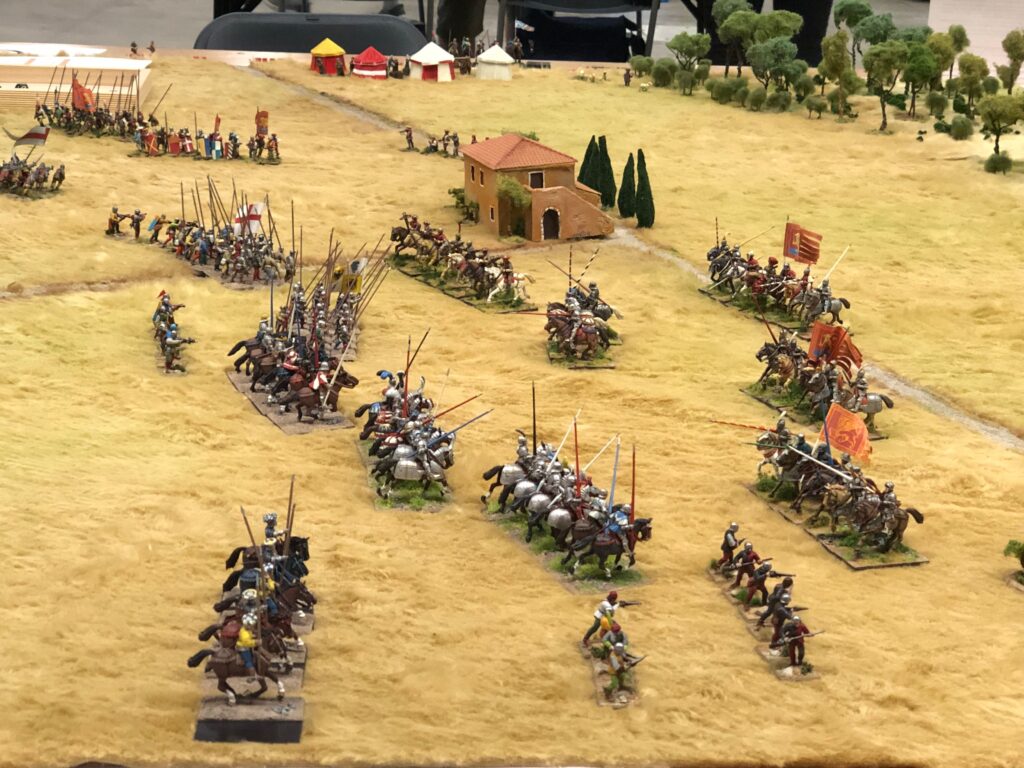
The rules are written for 28 mm miniatures, but other scales can also be used. The game is unit-based, with each unit consisting of a certain number of soldiers. The recommended basing is 20 mm × 20 mm for foot soldiers (25×25 for light foot) and 25 mm × 50 mm for mounted soldiers. The rules include a points system for army building. A typical game contains 5–7 units per side on a 180 cm × 120 cm table.

The game design focuses on a relatively short era, roughly 150 years, in the Italian peninsula. It begins with the arrival of foreign mercenary companies, continues with the rise of Italian condottieri and ends when firearms growth to a more significant role on battlefields.
The main body of the armies consisted of experienced mercenaries who were well drilled to manoeuvre on the battlefield. This is reflected in the rules through simple movement mechanics that allow units to move relatively freely. However, unit width affects both movement and combat. Wider units have advantages in melee but are more difficult to keep in formation while moving and therefore suffer cohesion losses more easily.
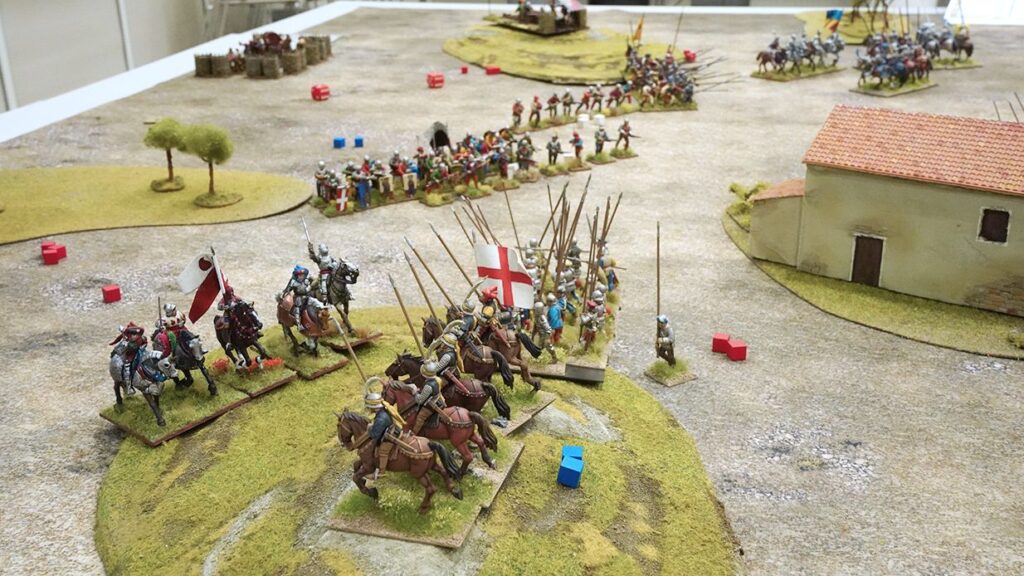
During the battle, each unit has its own command points that determine how effectively it can act on the battlefield. Command points can be stored for future turns, representing a unit maintaining its readiness to react to events on the battlefield. A captain’s skill affects how easily spent command points are recovered, simulating the leader’s ability to issue new orders.
In Useless Cowards, battles do not begin only when the armies deploy on the battlefield, but already in the camp, when the winning strategies are chosen. If players use terrain setup rules, they can try to gain as much advantage as possible for their army rather than trying to set up a nice terrain. This reflects the actions of real generals, who sought to fight battles in locations where the terrain offered them an advantage. Before the armies are deployed, the rules provide eight different strategies that represent the captain-generals’ chosen battle plans.

Melee combat is represented by charge orders, which always end either with the target unit breaking or the charging unit withdrawing. This simulates the frequent fallbacks and regrouping that occurred in battle. Infantry units maintain their cohesion longer and are therefore more difficult to break. However, once their cohesion is lost, it is harder for leaders to rally them, and they retreat a greater distance, sometimes leaving the battlefield altogether. Cavalry units lose cohesion more easily in melee but can rally their ranks more quickly, usually retreating a shorter distance and often being ready to renew the charge.
Actual casualties are usually not the most important factor in determining victory, as condottieri battles were generally less bloody than many other conflicts of the same era. Instead, routing units has a greater impact on army morale, and battles are often won by forcing enough enemy units to rout.